Gurgaon & Gurugram
Waterproofing Services in Gurgaon
Recurring damp patches, peeling paint and terrace leakage call for understanding the likely moisture source before choosing a treatment. Gurgaon Painters by Home Glazer provides waterproofing services in Gurgaon and Gurugram for terraces, damp walls and exposed surfaces. A coating alone may not resolve a plumbing, joint or structural issue, so the proposed work should be based on the affected area and site assessment.
Request a site discussion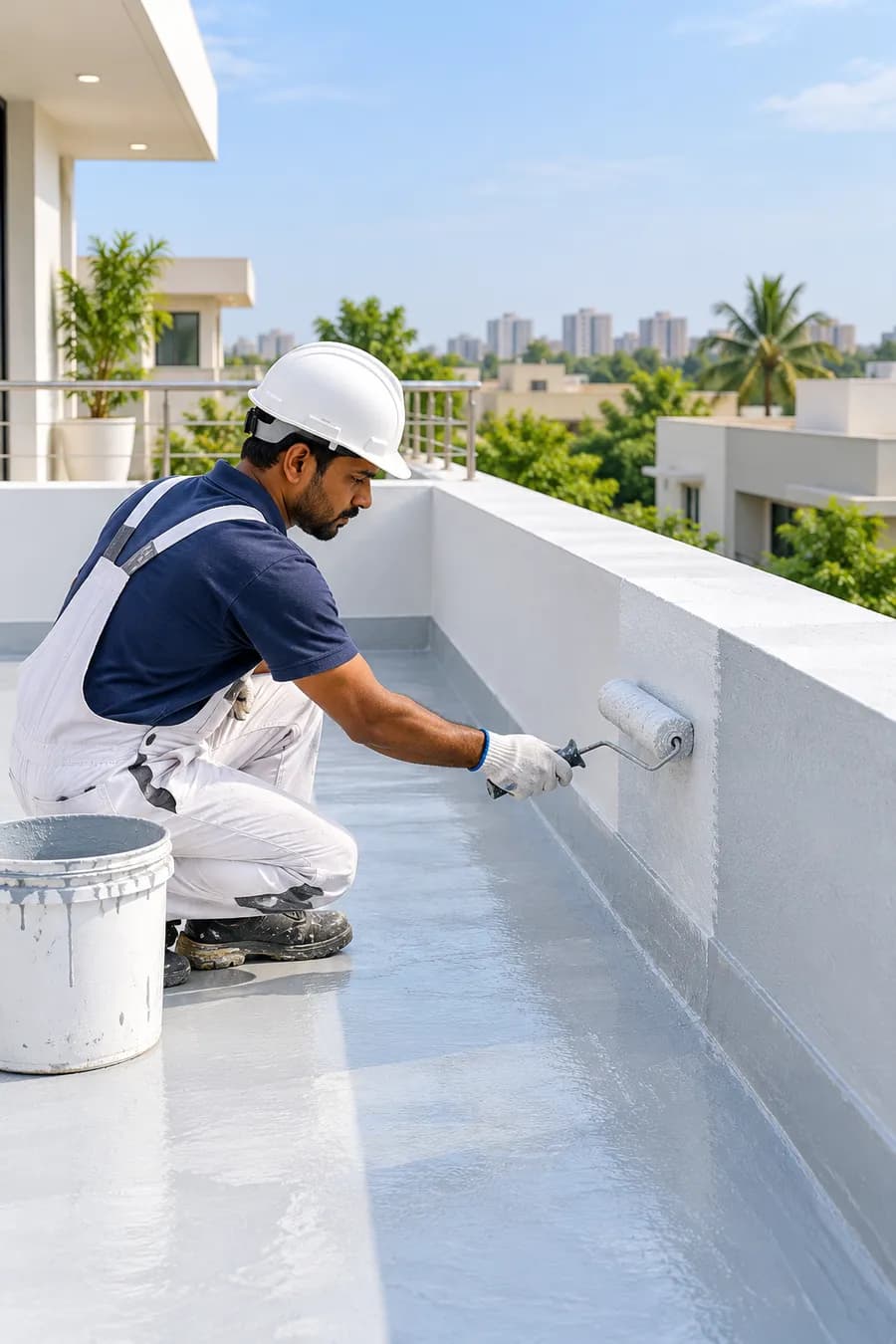
What to discuss for this service
- 01
Assessment of visible moisture symptoms on terraces, walls and exposed surfaces.
- 02
Discussion of the likely source and any checks or repairs needed first.
- 03
Treatment selection based on the surface and site conditions.
- 04
Guidance on curing, drying and when repainting can begin, following product instructions.
Start by understanding the moisture source
Water can enter through a terrace, exterior wall, joint, window or plumbing connection. Gurgaon Painters by Home Glazer discusses waterproofing for terraces, damp walls and exposed surfaces in homes, apartments and commercial buildings across Gurgaon and Gurugram. The first step is to describe where the dampness appears, when it started and whether it changes after rain or water use.
A coating alone may not resolve a plumbing leak, a structural issue or a problem coming from a neighbouring flat. A site assessment can help identify what is visible and what further check may be appropriate. The right treatment depends on the likely source, the surface and the site conditions.
Signs that may indicate a moisture problem
Moisture can show up gradually. These signs are reasons to investigate, but they do not identify the source on their own:
- 01
Paint that peels, bubbles or blisters, especially after rain.
- 02
Damp patches that grow, fade and return.
- 03
White powdery deposits on a wall, sometimes called efflorescence.
- 04
A persistent musty smell in a room, cupboard or corridor.
- 05
Soft plaster, discolouration or water marks below a terrace, balcony or bathroom.
Rust-coloured stains or flaking concrete near a leak may need assessment by a suitably qualified structural professional. Do not assume that painting over a mark will resolve the underlying problem.
Areas to consider when looking for water entry
The assessment should consider the affected surface and nearby building details. Possible areas to discuss include:
- 01
Terrace slabs and parapets, including cracks, outlets and wall-to-slab junctions.
- 02
Exterior walls, damaged plaster and gaps around windows, AC pipes or cables.
- 03
Bathrooms, kitchens and balconies, including joints and pipe connections.
- 04
Ceilings below upper-floor plumbing or shared building areas.
- 05
Basement and ground-level walls where moisture may enter from outside or below.
These are possibilities to investigate, not a diagnosis. Identifying which one applies to a property helps determine whether waterproofing, plumbing work, building maintenance or another specialist check should come first.
What a waterproofing scope may include
No single waterproofing product suits every building. Cementitious, polymer-modified, elastomeric, acrylic or liquid-membrane products are broad product categories; their suitability depends on the surface and the manufacturer's directions. Ask which specific system is proposed and why, and confirm the treatment area, preparation, coats and exclusions in the written scope.
- 01
Review of visible moisture symptoms on terraces, walls and exposed surfaces.
- 02
Discussion of the likely source and any checks or repairs needed first.
- 03
A proposed treatment matched to the surface, exposure and site conditions.
- 04
Surface preparation, crack or joint repairs and application of the agreed system where included.
- 05
Guidance on curing, drying and when repainting can begin, following product instructions.
How the waterproofing process works
- Describe where the dampness appears, when it started and whether it changes after rain or water use.
- During the site visit, discuss the affected area and nearby terraces, bathrooms, windows, pipes, joints and drainage.
- Review what was observed, what source is suspected and what further checks may be needed. If a plumber or another specialist should investigate first, clarify that before work is agreed.
- Agree a written scope for the treatment area, preparation, repairs, system, coats, product conditions and exclusions.
- Prepare and repair the surface as set out in the scope and product instructions.
- Apply the agreed system in the specified coats and allow the stated curing and drying time.
- Confirm any testing or finishing steps that apply to the selected system and surface; do not assume every project uses the same method.
- Discuss when repainting can begin and any care instructions for the treated area.
Plan the work around weather and drying
A dry, suitable surface and enough time for curing matter. Rain, trapped moisture or unsuitable application conditions can affect a coating, so the selected product's instructions should guide scheduling. If a leak is already active, contact the team to discuss what can be inspected now and what work may need to wait until conditions are suitable.
After treatment, allow the surface to dry and cure as directed before repainting. Painting too early may affect the finish. If repainting is part of the same project, coordinate waterproofing with interior or exterior painting so the sequence is clear.
Know what waterproofing cannot resolve by itself
A plumbing leak may need a plumber. Structural cracks may need an engineer's opinion. Water coming from a neighbouring flat or shared building area may require coordination with the society. Treating only the visible surface in these cases can leave the source unresolved. The proposed work should be clear about what it can address and what needs separate attention.
Simple maintenance can help spot issues early: keep terrace outlets clear, fix dripping taps and slow leaks, check gaps around service pipes and window frames, and look for changes after heavy rain. These steps do not replace an assessment when moisture returns or damage is visible.
Serving Gurgaon and Gurugram
Gurgaon Painters by Home Glazer serves projects across Gurgaon (Gurugram). Share the property location and when the symptoms occur so the team can confirm service availability and discuss next steps.
The website displays ISO 9001:2015, MSME, DPIIT and labour registration marks. Their current validity and scope should be checked with the issuing authorities. The business also links to customer reviews on Google; comments reflect individual customer experiences.
Gurgaon & Gurugram
Planning waterproofing for your property?
Talk with Home Glazer about your project and arrange a free site visit.